Marc MacYoung?
Dianna Gordon MacYoung?
Animal E-list
Crime Avoidance Lectures
Crime Blog
Colorado Classes
Contact Us
FAQs
Hosting A Seminar
Crime Prevention
Expert Witness
Knife Defense
Law Enforcement
Martial Arts
Military
Movie Consulting
Women's Self-Defense
Links
Our Linking Policy
On-line Store
Train with MacYoung
Testimonials
Terms of Use
Topics
of Interest

On this page:
De-escalation is for EVERYONE |
What you need to bring to the table |
Our approach to the subject |
What is de-escalation based on? |
Why do people become violent? |
What NOT to say |
Personal vs. Institutional Authority |
Four types of violence |
Further Resources
This page will introduce you to what is different about our approach to de-escalation. In addition it will acquaint you with why we think so many people fail when trying to de-escalate a potentially violent situation. Our violence de-escalation program is not for use on a harried businessman who, late for a meeting, becomes verbally abusive when pulled over for speeding. Nor is it for handling an obnoxious and dissatisfied customer in a store.
Our de-escalation program is designed for confronting a truly dangerous and violent person and preventing him from attempting to rip your throat out with his teeth.
In light of this, the quote at the top of the page might not seem to apply. But when it's getting close to where you're going to have to shoot someone or die, that's when you REALLY need to be able to de-escalate.
A point we want to make right up front is this: If
you're trying to de-escalate out of fear, you've made
your life a whole lot harder. Our approach
de-escalating violent people is from the twin positions
of:
1) Power
2) A deep dislike of doing paperwork
Point one is because the person threatening violence isn't the only one who can play that game. A maxim of our is: 90% of all potentially violent situations can be de-escalated(1). But that means there are still that 10% that will go sideways no matter what you do.
That's alright though, because knowing about that 10%, we've prepared for violence. We really don't want to, but we will. This is the defensive tactics and de-escalation connection that is so often overlooked by most programs. You cannot reliably and successfully deescalate if you are afraid of violence. That gives the violent person the power. On the other hand, knowing we can handle the violence the person might offer gives us power to negotiate.
This is an incredibly important element of successful de-escalation, and if you don't have you own power, you are at a serious disadvantage. That 90/10 ratio can -- and will -- reverse on you
Point two is while we're not afraid of paperwork, going to court or being fired ...it's a real pain in the butt.
Two issues arise from this. First is given a choice between dying (or being grievously injured) or doing paperwork, we'll take the paperwork. In fact, sign us up. Most people approach violence from the stand point of not only being afraid of violence itself, but more afraid of 'paperwork.' This gives the violent person a huge advantage.
A healthy dislike for both violence and paperwork is not the same of being afraid of both. That 'fear' of both leads to many people making mistakes when it comes to de-escalation. Violence and paperwork are not the worst things that can happen to you. The 'worst things' usually arise because the violent person senses your fear and knows acting out is safe. In those circumstances, why shouldn't he become violent?
Second, if you can de-escalate someone instead of having to go physical, the paperwork is kept to a minimum. When violence doesn't happen, everybody wins! Nobody dies. Nobody gets hurt. Nobody has to do extra paperwork. Nobody get charged and nobody gets sued! Life really is easier for everyone when violence doesn't happen.
You will find when you approach de-escalation from this perspective, not only will you become much better at de-escalation, your fear level will be reduced and you'll get more respect, but your paperwork load will decrease significantly.
With this in mind, we'd like to give you a good rule of thumb: People become violent because they want something.
Remember that concept, you will see it again and again. More importantly, it can save you from spitting blood.
De-escalation Is For
EVERYONE!
Why is knowing 'people become because
they want something' important?
Well we can start with the fact that it allows use to
identify if the goal is external or internal. And
that is a going to make
A) a
complex subject a lot easier to understand.
B) deescalating a violent situation a WHOLE lot easier
(And BTW, we strongly suggest you follow that last link about wanting something. It's an introduction to the 'kinds' of violence and what people are hoping to achieve by becoming violent.)
When what someone wants is is outside of them (external), de-escalation is relatively easy. Why do we say that? Did you know: Most physical violence comes with instructions on how to avoid it. He wants you to do -- or to stop doing -- something. How will you know what to do? He's going to tell you. For example: If you don't shut up I'm going to kick your ass. (This is a classic example of behavioral correcting violence) Most people fixate on the last part and totally ignore the first. Therefore they continue with a behavior that provokes violence. A behavior that if they'd changed would have prevented violence.
Here's good news about de-escalating someone with external goals, even if that exact goal cannot be reached, some kind of working compromise usually can be achieved. As in "You want B. B isn't going to happen, but would you settle for b?" Keep this point in mind, we'll come back to it in a second.
Where things start getting complicated is when the person's goals are inside their own head. This makes the both internal and subjective (e.g. 'respect,' pride or acting out). And since the goals are established internally and subjectively, they can change in the blink of an eye.
Internal goals do NOT necessarily mean the person is insane, but the source of the violence IS from what is going on inside that person's head. While not 100% accurate, a good way to understand this that what's going is really about is the person's fears, insecurities, emotions, dysfunction and perceptions. What you see on the surface often isn't what's really going on. This is why a conflict can often seem so confusing. It's supposedly about external goals, but no matter what you try it doesn't seem to fix it.
The first step of being able to de-escalate a situation is to be able to spot what kind of situation you're dealing with.
Is it about what the person is ranting about or something else?
How do you know? Well the truth is, most of the time, he'll tell you and show you. All you need to know how to do is listen. Sometimes he'll say it outright. Other times you'll have to know -- when you hear certain phrases -- that something else going on. Once you hear those phrases, you'll know internal goals are running the show.
Whether the goals are external or internal, a fundamental rule of de-escalation is this: You're going to help that person get what he or she needs while at the same time getting what you need.
That last statement is the start of a huge paradigm shift about de-escalation. De-escalation ISN'T JUST about keeping a situation from becoming violent, it's about problem solving.
What's more it's about solving EVERYBODY'S problem.
That right there is the fundamental flaw with how most people approach de-escalation. They are only thinking about themselves. Which, if you think about it, is EXACTLY what the violent person is doing. He wants what he wants and to hell with you. A person who is only concerned with themselves (and their safety) while de-escalating isn't trying to solve anybody else's problem. They want the confrontation to end, but 'who cares about what set that person off in the first place?'
Why is that important? Because, if you don't approach it from the standpoint of 'let's see if we can solve everyone's problems,' then there is NO reason for the person to allow him or herself to be talked down! They WILL go off on you.
What's more is if you are 'saying nice doggie' while reaching for a stick (A.K.A placating him while waiting for security to show up and save you) then there's a good chance he will sense this and it will enrage him more.
Deescalation is not just about you. Deescalating a situation is for everyone's gain. Not approaching deescalation from the standpoint of trying to solve everyone's problem is a fundamental cause of failure for most deescalation attempts.
What You Need To
Bring To The Table
In order to achieve this we say you need to
meet five standards:
In order to understand point one we recommend you spend some time reading the Alpha Behavior Hub. If the person cannot trust you, then there is no reason for him to try to negotiate.htm" onMouseOver="MM_displayStatusMsg('conflict negotiate');return document.MM_returnValue" TITLE="negotiate out at the sharp end"> negotiate with you.
Our approach
to the subject
Our approach can be summed up
simply as: Don't give him a reason to go off, but do
give him lots of reason not to.
Those reasons not to attack aren't just because you are talking to him. They include the simple fact that if he does attack, he will lose. As the quote at the top of the page states it is the violent type's very belief in the effectiveness of violence that makes them susceptible to deterrence of a opposing force. When dealing with violent people your ability to foil violence is a critical part of your ability to de-escalate.
To us, de-escalation is not just a stage in a use of force continuum. It is an integrated tactical component of a much larger strategy. A strategy that ensures your safety when using it. This is because: A critical component of de-escalation is both the willingness to use force if necessary and the ability to do it effectively. Your ability to respond tactically is not only a deterrent, but an assisting element in de-escalation.
And that's how we approach this subject. We're talking about a system for dealing with the multiple felon gang-banger -- who knows where to slide a knife through your vest -- and is about a half inch from deciding that ramming a shiv into you is a good idea. Your ability to convince him not to attack is, by and large, based in making sure he doesn't get what he needs to successfully attack you.
In dealing with such a person, physical force is not your last option, because it is his first choice. You may have a preferred option (de-escalation/ communication), but you are ready for other options.
But having said that let us also say: In cases like this, de-escalation isn't intimidating him into submission. It is manipulating him into choosing a second or third choice. And doing so because he realizes his first choice won't work. How you do that without escalating the situation yourself is what the control presence system is about.
Let us state unequivocally that de-escalation works better when he knows he can't successfully attack you. Superior firepower is an invaluable tool when entering into negotiates. This means a reliable defensive tactics program must be the back up for the negotiates. Without this ability you aren't necessarily begging him not to attack, but you are definitely trying to trick him into not attacking. And there's a good chance he will know that. This increases your chances of being attacked. That's because someone who doesn't believe that he/she could 'take' the violent person will display non-verbal cues communicating this to the violent person. This non-verbal leakage is not something that the person doing it is aware of, but it IS happening. And it tells the violent person that you are afraid of him -- even if you are doing your best and loudest command presence display.
As the threat of violence is immediate, so too needs to be your ability to counter if the perp decides to attack. When you can do this you are not begging or tricking someone into not attacking someone that he know he could take. Look closely at that last part. Never think that a violent person doesn't know who he can and can't safely attack. A large part of successful de-escalation is making sure he knows you are in the "not safe to attack" category. Therefore, the other alternatives you present him are more appealing.
Although, our program works within
institutional goals and departmental guidelines, our
main concern is the safety of the line officer.
Having said this, it's a win-win situation for everyone.
A secondary benefit for the officer is the
ease/effectiveness of handling potentially violent
situations without them escalating -- less violence,
less paperwork. The fourth and fifth benefits are it
reduces the chances of the department from being sued or
paying out disability costs on injured officers. A sixth
benefit is the increase of officer confidence results in
a decrease of use of force situations.
Return to top of page
Why do people become
violent?
Before we continue we would like to
ask you two simple questions. First: Why do people
become violent? Think of at least three different reason
and write them down.. (Please do this before
continuing)
Look at those three reasons and ask yourself the second question: Are those the core reasons? What's underneath? Or, like symptoms, are they indicative of a disease, but not the disease itself?
In our experience, when asked when asked why people become violent even most professionals (including many people certified in psychology), list symptoms, not the disease. This brings us to the second question: What is both a much simpler and consistent motivation?
Take it down a level more. Believe it or not, the most common response by line officers is closer to the motivation than the deeper explanations many psychologists come up with. That's because they see it every day. When, instead of looking at it from an institutional perspective, you look at the question of violence from an individual standpoint, a startling revelation becomes clear. Our answer to why does someone become violent is simple:
He wants something.
Something that he thinks he can get by being violent. With this in mind, look again at the three reasons you wrote down and see if they would -- while still being true -- fit into this much bigger category. In other words, are the three motivations you wrote down the cause of violence or do they actually define what the person wants?
Anger? Does he want to punish you and/or stop unacceptable behavior? Fear? Does he want the object of his fear (you) to go away or does he want to stop you before you hurt him? Profit? He wants your money or possessions so he can get money. Control? What is that except getting what he wants from you through the act or the threat of violence? Pride? He wants his self-esteem back. Punishment? Often very much a matter of getting his self-esteem back and control. Again and again, no matter what the motivation for violence is, that verb "want" keeps on cropping up.
We find that significant, especially when you are standing between him and what he wants.
Understanding this fundamental about the nature of violence is critical for effective de-escalation. If you ever lose sight of this foundation of violence, then you greatly increase your chances of being attacked. That is because verbal de-escalation is negotiate and communication. It is not command, control or manipulation (although all of these are important strategies within it) De-escalation is convincing the person that he cannot get what he wants through violence. But, if he truly wants it, the way to get it is through other means. That is what we mean when we say "get him choose option 2 or 3"
Effective de-escalation also means that you are working with him to achieve something that -- while maybe it won't be exactly what he wants -- is a viable alternative. This leaves him the choice, co-operate with you to at least get something or lose badly. An example of this is our much loved line for getting someone to settle down and start behaving: Don't make it easier for me to arrest you than leave you out. Return to top of page
Why doesn't he want
to attack you?
A point overlooked by many
verbal de-escalation programs, he may not want
to be talked down. He, in fact, may be pretty
sure he can get what he wants through
violence. If that is the case, you had better have
something up your sleeve that will make him want
to be talked down.
Or, if he decides to go anyway, something that will immediately convince him "bad decision."
Trusting an effective control system is a critical component in effective verbal de-escalation. The connection between de-escalation and control tactics is a "which came first, the chicken or the egg?" issue. If violence erupts, the officer must have a defensive tactics that he/she must have faith in to keep him/her safe and allow for easy control of an aggressive suspect. If it goes physical, you must "know"-- down to your bones -- that you will win. In the same breath, having the ability to easily put a violent perp down will often deter violence -- especially when used as an adjunct to de-escalation. Therefore, your verbal de-escalation is based on a choice, you're talking because that is your preferred option. You are not pleading to the guy hoping that he won't become violent.
We cannot stress enough the importance of the connection between de-escalation and effective defensive tactics. Defensive tactics that the officer will trust when facing an enraged 250 pound aggressive suspect. If your officers don't have that faith don't expect them to be able to effectively de-escalate. It is that 'faith' that will allow the officer to confidently step up to handle the danger. It doesn't matter if the officer's defensive tactics training has the departmental seal-of-approval, the officer must know it works. This must work on the deepest level of the brain. Although management certainly can spell it, the "puppy brain cannot spell d-e-n-i-a-l(1)" when it comes to facing a violent offender with ineffective defensive tactics The telling question about the effectiveness of departmentally approved tactics is simple: Would YOU trust your life to them? If not, then how can a department realistically expect their line officers to do so? This creates a secondary problem however, if the line officer doesn't have faith in it, there will be the non-verbal leakage of this doubt. Uncertainty that the potentially violent person will sense and react to, thereby making de-escalation more difficult, if not impossible.
We want to help you learn how to establish a violence deterring Control Presence. This as opposed to the current -- and less effective -- ideology of a command presence. Command presence without the confidence to back it up comes across as scared posturing. To put it in criminal terms, the officer is coming across as a punk. Without a solid set of skills for effectively handle violence, a command presence is just bluster and fear. And the potential attacker knows it. The officer's understanding of the physical act of violence -- and what it takes to attack -- is integral to effective de-escalation and prevention of violence. It is extremely difficult to prevent someone who knows "he can take you" from becoming violent -- especially if he has already Shadowdanced you and is in position to successfully attack you. Return to top of page
What NOT to say
Ever notice how some people just seem to piss off a
potentially violent person? It almost seems like these
folks have a checklist of ways to provoke an attack.
Believe it or not, there really is a checklist.
There are certain behaviors that will get you attacked!
This page will help you prevent from
running down that list.
Personal vs. Institutional Authority
The
underlying concepts of this idea are more thoroughly
explored on
Institutional vs. Individual Goals page. In this
context, however, what we are talking about is your
ability to make sure the guy loses on at least two
fronts if he decides he doesn't want to be talked down.
And make no mistake, the choice to go off is most
definitely a conscious decision -- even among the
mentally ill.
To really increase your chances to de-escalate a situation teetering on the edge of violence you need to be double trouble for him. That is to say, if the person decides to go off on you, he is going to lose on two ways, short term (a smack down with no secondary victory) and long term (the repercussions for his actions)
On your side, the ability to de-escalate a situation will be based on three core issues. 1) Your ability to deescalate rather than further enrage. 2) Your ability to do a smack down on him IF you were to chose to do so (Your personal or individual authority). 3) The authority you represent and the repercussions that will come down on him for violating it. If you do not have all three, or go into a potentially violent situation as though you are representin' the institution, then at the very least things will be far more difficult than things need to be. That is of course if it doesn't explode.
Unfortunately, too many people rely on the last and fail to develop the first two. Functionally these people are just bodies in uniform to fill the administrative needs and quotas. But in case of a situation going violent these people are often gawkers. If they attempt to help in the quelling and controlling of a violent individuals they are often more a hindrance than help. This is assuming of course assuming that their previous behaviors didn't escalate the situation to begin with. Return to top of page
The Four Types of
Violence
In the book
Ending Violence Quickly we discuss the model of the
Four Types of
Violence. This fast, effective, down-and-dirty means
for preventing violence has been taught to LEO's of nine
different countries. It is based on recognizing the
type of violence you are facing and by extension
knowing the most effective strategy to
de-escalate.

1) 90% of all situations can be de-escalated. But that doesn't mean they WILL be. In fact there are some people who seem to have a knack to pretty well guarantee a situation will escalate by just opening their mouths. Usually these people only have one strategy that they try to apply to any and all situations. In other situations, if a particular individual doesn't like a person, someone else has to be the one to step up and do the negotiate. Return to Text
2) Lt. Col Dave Grossman in a
private conversation about faith in one's training and
overcoming the 'unstoppable opponent/malfunctioning gun'
nightmare so common to those in high risk situations
Return to top of page


The Missing Link:
Self-Protection Through Awareness, Avoidance and
De-Escalation
Learn More >
Order Now!
Violence, Blunders And
Fractured Jaws: Advanced Awareness, Avoidance and Street
Etiquette
Learn More >
Order Now!

Do You See What I am Saying?
Reading Body Language
Learn More >
Order Now!
Judicious Use of Deadly Force
Learn More >
Order Now!
The Bulletproof Mind
Learn More >
Order Now!

Escape Combatives
Special Bonus Feature
ESCAPE DRIVING
Learn More >
Order Now!
Emotional Survival for Law
Enforcement
Learn More >
Order Now!
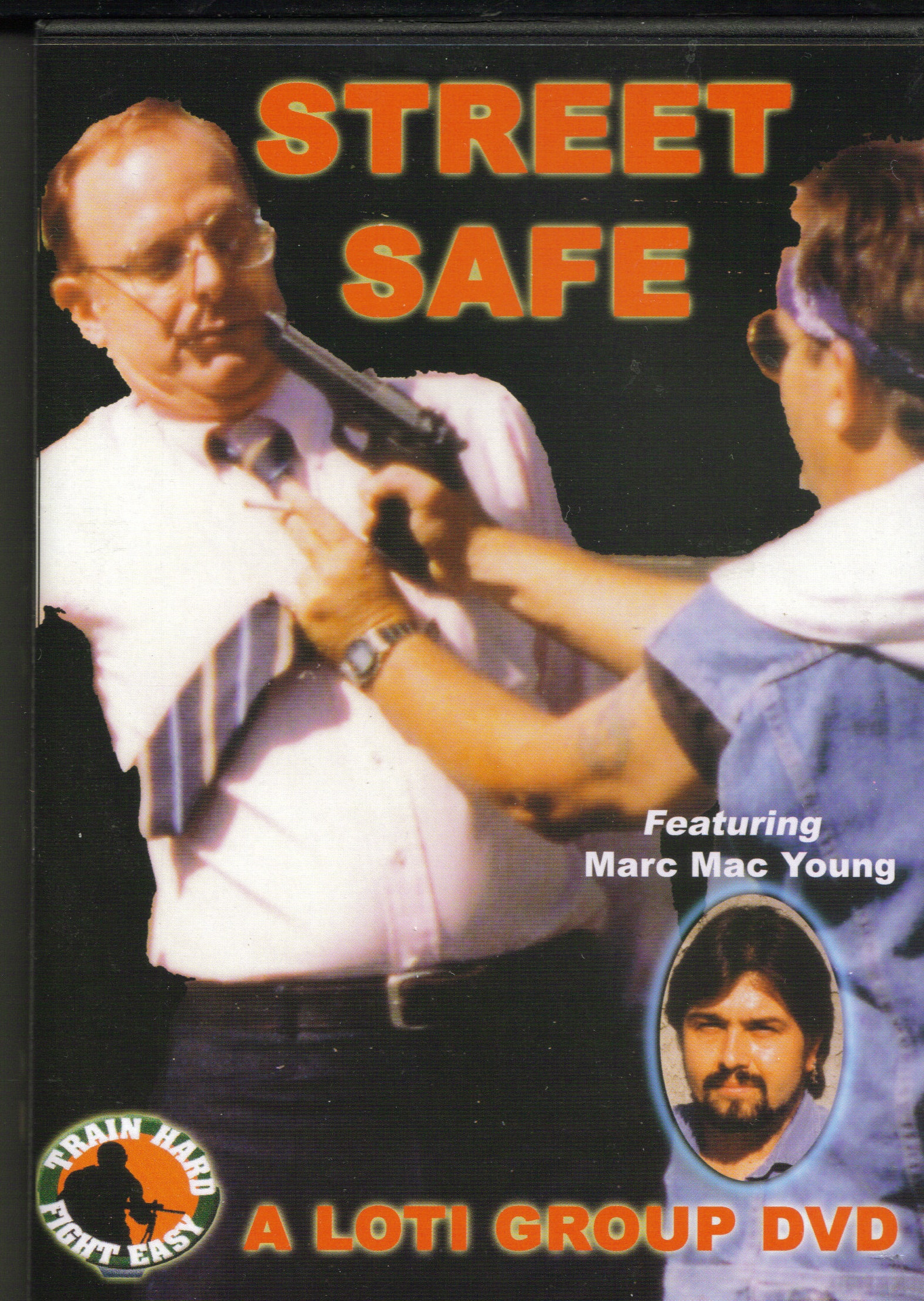
Street Safe: How to
Recognize and Avoid Violent Crime
Learn More >
Order Now!

A Bouncer's Guide to Barroom Brawling
Learn More >
Minimum Damage, Maximum Effect
Learn More >
Order Now!
Experience- & Reality-Based
Self-Defense
Learn More >
Order Now!

Survivor Personality
Learn More >
Order Now!

Terror at Beslan
Learn More >
Order Now!
Turning Fear Into Power
Learn More >
Order Now!
Warriors: On Living with
Courage, Discipline and Honor
Learn More >
Order Now!
Real Fighting
Learn More >
Order Now!
Fighting Footwork of Kuntao/Silat
Volume 1
Learn More >
Order Now!

The Deadliest Men
Learn More >
Order Now!

Fighting Footwork of Kuntao/Silat Volume 2
Learn More >

Carlos Hathcock: In His Own Words
Learn More >
Ending Violence Quickly
Learn More >
Order Now!
Fighting Footwork of Kuntao/Silat Volume 3
Learn More >

Beyond Brazilian Jujitsu
Learn More >
Ground Combatives for Police
Learn More >
Order Now!
Cheap Shots, Ambushes and Other
Lessons
Learn More >
Order Now!
Fighting Footwork of Kuntao/Silat Volume 4
Learn More >
Street Fighting Essentials
Learn More >
Order Now!
TACSAFE
Learn More >
Order Now!

High Risk Entry
Learn More >
Order Now!
Fighter's Guide to Heavy Bag Training (DVD)
Learn More >

Fighter's Guide to Heavy Bag
Training (Book)
Learn More >
Order Now!
CQB Clearing Tactics For First Responders/Patrol
Tactics for 911 Officer
Learn More >
Psycho-Physiological Effects of Violent Encounters
Learn More >
Cute Lawyer Tricks
Learn More >

| About navigating this site | Animal List | Bibliography | Bullies | Burglary while on vacation | Classes in Colorado | Car Jacking | Children and Martial Arts | Child Safety | Criminal Mindset | Cults in MA/SD | De-Escalation | E-mail Dianna | E-mail Marc| FAQs | Have MacYoung speak about crime avoidance | Home Page | Home Defense | Hosting a Seminar | Fear | Five Stages of Crime | Knife Fighting | Legal Issues | LEO/Correctional Officer/EMS | Linking policy | Links | Martial Arts | Photo Gallery | Property Crime | Psychology | Rape | Robbery | Safe Dating | Self-Defense Training | Selling your books/DVDs on NNSD | Seminar Schedule | Stalking/Domestic Violence | Street Fighting | Terms of Use | Testimonials | Train with Marc MacYoung | Who is Dianna Gordon MacYoung? | Who is Marc "Animal" MacYoung? | Victimhood | Workplace Problems | Zero Tolerance | ||
| ? 1998-2008 No Nonsense Self-Defense, LLC. All rights reserved. |
